






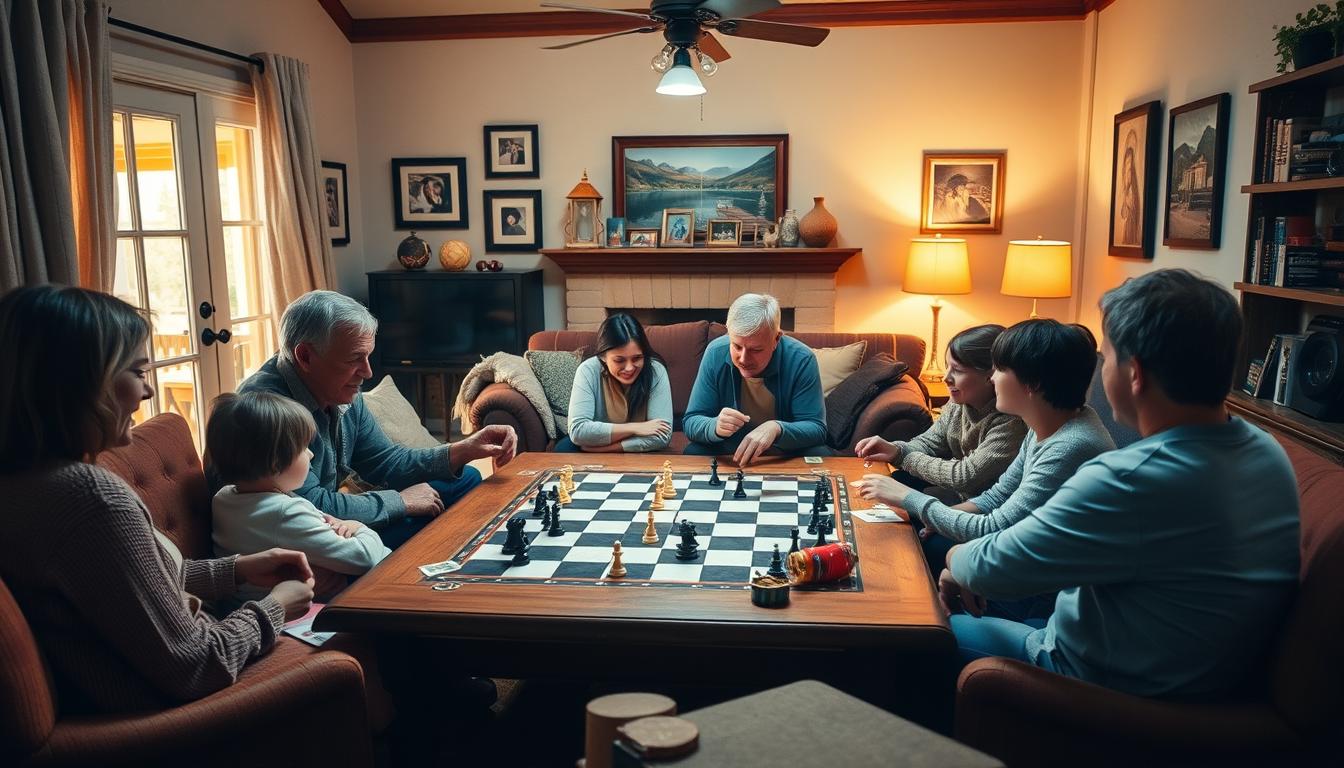
Family game nights are more than just fun. They are key to bonding. Dr. Stuart Brown’s research shows play is vital for all ages. These nights offer quality time, helping us connect in our busy world.
From board games to card games, they bring joy and strengthen ties. This proves how important family game nights are.
Playing games together sparks conversations that build empathy and teamwork. Families see up to 30% better verbal communication through play. This creates spaces where everyone’s voice is heard.
By making time for this, families build traditions. These moments turn ordinary evenings into chances for growth and laughter. They help create strong, lasting bonds.
Studies show game nights cut down on screen time and boost problem-solving skills. Whether it’s debating moves in Gravity Maze or laughing over Zingo, these moments teach patience and respect. With 60% of families valuing these nights, it’s clear: game nights are vital for families to thrive.
Strengthening Family Bonds
Playing games together makes special moments even more precious. Unlike just watching screens, games like board or card games get everyone involved. They lead to laughter, conversations, and shared goals that strengthen family relationships.
Psychologist Stuart Brown says playing together sparks curiosity and helps us connect better with others.
“Play is a language we all understand,” says child development expert Dr. Jane Nelson. “Games become a space where trust and empathy grow naturally.”
Games like Pandemic or Forbidden Island teach teamwork. Games that are competitive help kids learn to win and lose gracefully. In Silver Spring, caregivers say these activities make kids feel understood, boosting their emotional security.
These activities also reduce stress from screens—46% of teens say devices get in the way of family time. Playing games regularly lowers stress, making it easier to talk openly.
Weekly play helps families trust each other more as they face challenges together. Even simple card games teach patience and how to communicate. These moments are not just fun; they’re essential for building empathy and resilience in children.
As families play, they create lasting memories. Game nights become a key part of their emotional well-being and respect for each other.
The Benefits of Play for All Ages
Family game nights bring multigenerational play benefits that make homes learning and connection centers. The Hicks family, with 40 games, plays weekly to strengthen family bonds. For kids, games like Codenames improve cognitive benefits of games—boosting math, strategy, and focus.
Studies show these skills lead to better school performance. The American Psychological Association backs this up.

Adults find play for adult development in games like Carcassonne, which lowers stress and sharpens the mind. Psychologist Stuart Brown says keeping playful into adulthood boosts creativity and resilience. Even teens benefit from games like Pandemic, which teach teamwork and improve communication during tough times.
Learning to lose gracefully is a critical life skill for children.
Games like Ticket to Ride also help build emotional strength. Harvard research shows family time strengthens relationships, boosting kids’ self-esteem and social skills. Places like Snakes and Lattes café, with 3,500 games, show play is for everyone, not just kids—it’s a key to lifelong growth.
Promoting Problem-Solving Skills
Family game nights are more than fun. They’re a chance to practice solving real-life problems. Games like Chess and Monopoly teach strategic thinking. They show how to plan ahead and adapt when things change.
Play sharpens critical thinking and resilience through trial and error. — Dr. Brown
Pandemic is a game that teaches teamwork. Players work together to stop a crisis. They discuss, debate, and adapt as the game evolves. Losing is a chance to learn and try again.
Games like Connect 4 and Scrabble encourage creative thinking. When kids solve a puzzle or find a winning move, they’re training their brains. Parents can show them how to stay calm when they lose. This makes game nights both enjoyable and educational.
Technology-Free Family Interaction
Screen-free activities like board games offer a digital detox that everyone can enjoy. In today’s world, where screens are everywhere, it’s key to have time without them. Families can trade hours of screen time for laughter and stories with games like Monopoly or Charades.

Studies show kids with too much screen time struggle more in school. Games like Scrabble or Pictionary challenge minds and improve communication. They teach patience, teamwork, and how to solve problems, skills lost in screen time.
“Families who play together build trust and empathy that screens can’t replicate.”
Begin by setting aside one night a week for digital detox with games. Choose games like Codenames or Ticket to Ride for fun and strategy. These games offer benefits without needing Wi-Fi. They help families from different generations connect and build trust.
Games like Uno or Guess Who? show that simple games can bring big joy. Investing in a few board games is a smart way to spend money for years of fun. This leads to stronger family bonds, healthier habits, and memories made in person, not online.
Encouraging Creativity and Imagination
Creative family games spark imagination, making game nights fun and educational. Games like Story Cubes or Once Upon a Time turn storytelling into a shared adventure. They let kids and adults invent tales on the spot.
These storytelling games for families entertain and build creative thinking exercises. They strengthen problem-solving and verbal skills.
Imagination-building activities thrive when rules bend. Swap characters in Pandemic to role-play as scientists. Let kids design new game paths. Simple tweaks like this transform classics into open-ended challenges.
Drawing games like Pictionary or collaborative storytelling apps like Synergy fuel visual and narrative creativity. Even small adjustments can ignite big ideas.
Games like Codenames blend wordplay and strategy, while Exploding Kittens mixes humor with quick thinking. Even classic Scrabble sparks vocabulary creativity when players invent fictional words.
These moments aren’t just playful—they’re mental workouts. They teach adaptability, a skill valued in school, work, and life. Families who embrace these creative family games aren’t just having fun. They’re nurturing minds ready to tackle real-world challenges with fresh perspectives.
Tradition and Ritual in Family Life
Family traditions are key in shaping who we are and how we face challenges. A 2013 study by psychologist Sara Duke showed that kids who know their family’s history do better under pressure. These rituals, like weekly game nights, offer stability in a busy world. Creating family rituals helps families feel connected—70% say traditions bring them closer together.
“Knowing where you come from builds emotional armor,” noted researchers linking family stories to resilience.
Starting a game night tradition is easy: just pick a day, add some special snacks, or a theme. Over time, these moments become treasured family heirlooms. For example, one family in Ohio has played Monopoly every Thanksgiving for decades, passing down rules and laughter through generations.

Creating these family routines needs to be flexible. As kids get older, change games to fit their interests—board games for teens, tech-free trivia for younger ones. Over 50% of families adjust traditions to keep them fun.
Research by Ann Buchanan at Oxford found that grandparent involvement boosts kids’ happiness. Even small actions, like celebrating with a victory dance, create lasting memories. These moments not only bring joy to childhood but also support emotional health for life.
Inclusivity and Team Building
Family game nights are best when they pick inclusive family games for everyone. Games like Inclusion Jenga or Cultural Quest teach teamwork. They make families work together and celebrate their differences.
More than 73,930 teams at places like Amazon use these games. They show how important teamwork is. Families can change rules to make games fun for everyone. Even games that seem competitive can become about supporting each other.
“Teamwork grows when everyone feels heard,” notes a 2023 study on family dynamics.
Games like Back of the napkin or Guess My Country are both fun and educational. By focusing on working together, families build respect and unity. Small changes, like giving hints, make games accessible to all.
Selecting the Right Games
Choosing best family games means picking games that fit each player’s age and interests. For the little ones, games like Guess in 10 Junior (ages 3+) or Sinking Stones are great. They help with thinking skills. Older kids might like games like Rapid Rumble to improve vocabulary or Found It! for teamwork.
Always check the age guidelines but also think about your family’s energy and focus. This will help you pick the right games.

Begin by adding a few games to your collection. Include fast games like Charades or card games like Uno. Also, add some strategy games. Websites like Funagain Games and Amazon have great suggestions.
Look for games that can be played in different ways. For example, Guess in 10 Marvel is a winner of NAPPA and Toy Insider awards. It’s perfect for families who like to play together in their own way.
Let kids pick one game each week to boost excitement.
Make sure to have games that everyone can enjoy together. Mix old favorites like Monopoly with new ones like Codenames. The goal is to have fun and laugh together, not to get too complicated.
Remember, the best games are the ones everyone can’t wait to play. So, keep things exciting and fun for everyone.
Game Night Themes and Ideas
Turn regular nights into special memories with themed game night ideas. Begin by planning a family game night that everyone will enjoy. Try a “Mystery Night” with games like Clue and snacks like finger sandwiches. For a global twist, host a “World Tour” with games from around the world, like UNO or Settlers of Catan, paired with snacks from different countries.
For special events, pick special occasion game ideas. Celebrate holidays with a “Holiday Trivia” night or birthdays with a “Game Tournament.” Even a simple “Movie Night” theme can be fun with games like Trivial Pursuit and popcorn. Don’t forget to add game night snacks like trail mix or candy apples.
“A well-planned theme turns game night into a shared story,” says Family Game Night Pro, highlighting how themes boost engagement.
Don’t worry about making everything perfect. Let kids help with decorations or teens choose the music. Mix themed game night ideas with activities like making DIY pizza or setting up a photo booth. For small groups, try “Escape Room” challenges or a “Pajama Party” with cozy snacks and games like Twister.
Whether it’s a weekly event or a holiday party, small touches can make a big difference. Themes can inspire creativity, from “Ancient Egypt” trivia to “Outer Space” charades. The aim is to create laughter, teamwork, and lasting memories.
Overcoming Challenges in Family Game Night
Even the most fun game nights can hit bumps. Handling game night conflicts starts with clear rules and a focus on fun over winning. When sore losers in family games turn the mood sour, pause the game. Say, “Let’s all take a breath. Winning isn’t the goal—spending time together is.”
Scheduling regular game nights works best with consistency. Pick a fixed day, like every Friday, but stay flexible. Use a calendar app to block time, even if it’s just 30 minutes. Mix short games on busy nights—UNO or charades—then save longer sessions for weekends.
For mixed ages, modifying games for all ages keeps everyone engaged. Turn Monopoly into a team game, or simplify rules for younger kids. A parent might say, “We’ll split into teams so everyone wins together.”
Data shows 85% of families agree teaching grace in winning/losing strengthens kids’ social skills. When tempers rise, redirect attention: “Let’s try a new game where everyone can shine.”
Remember: small hiccups are normal. Turning challenges into teachable moments makes game nights a lab for patience and teamwork. The goal? Laughter, not perfection.
The Future of Family Game Nights
Family game nights are changing to include digital board games and mix of old and new. Families can pick between classic games or apps that add fun to screens. This way, everyone, from tech-loving teens to card game fans, can enjoy.
Adapting to different ages and interests is key to evolving traditions. Families might start with games for kids and move to digital quizzes for teens. Even when life gets busy, regular game nights keep everyone close. Now, relatives far away can join in via video calls, making it even more fun.
Studies show game nights benefit families long after kids grow up. Games teach teamwork and resilience, helping kids face life’s challenges. Dr. Brown’s research shows how childhood play memories inspire adults to start their own family traditions. These moments strengthen communication, making game nights a lifelong bond.
Game nights, whether with Monopoly or a tablet app, keep families connected. By mixing old favorites with new tech, families can create traditions that grow with each generation. The important thing is to make game nights a regular habit, building memories and skills for years to come.