





Building forts is a timeless way for families to come together. It’s not just play; it’s a bridge between generations. Parents get to relive their childhood by creating secret hideouts.
This shared activity strengthens family bonds. It also lets kids explore problem-solving and creativity.
Today’s kids love hands-on learning, and fort building is perfect for that. Schools in Europe use fort projects to teach STEM skills. This turns imagination into real skill-building.
Kits like Figgy make it easy and safe. They use Greenguard Gold-approved fabrics. Even preschoolers can join in, learning independence and teamwork.
With more screen time, building forts is a great break. Using blankets or Figgy’s covers creates lasting memories. It’s more than play; it’s a way to connect hearts across ages.
The Joy of Building Forts: A Shared Experience
Building forts is more than just stacking blankets over chairs. It’s a way for generations to connect. When parents and kids make forts together, they relive the magic of their childhood. This activity lets them create new memories together.
The simple act of draping sheets or arranging pillows turns into a special bonding time. It’s a place where past and present meet. This is where families come together, creating lasting memories.
“Building forts with my kids felt like stepping back into my own childhood, but now I’m part of the story,” shares one parent. “It’s where laughter and creativity collide.”
Studies show 85% of kids build strong family bonds while making forts. They learn teamwork and communication. Kids also get better at solving problems as they decide on materials and design.
Adults also gain from this activity. It helps them reduce stress and find their inner child again. Every blanket fold or stick staple becomes a way to show love and play together.
These forts are like time capsules. Parents relive their memories while starting new traditions. The fun is in the journey, not the end result. Whether it’s couch cushions or backyard branches, the effort creates special worlds. And in those worlds, families grow closer.
Materials You Can Use for Fort Construction
Building a fort doesn’t mean you need to go shopping. Begin with blanket fort materials like old sheets, comforters, or tablecloths. Use sturdy  Repurposed household items like chairs, tables, or broomsticks as supports. Hold it all together with binder clips, clothespins, or heavy books.
Seasonal changes are important. In cold weather, add fleece blankets for warmth. For summer, use light fabrics like mesh or sheer curtains. Outdoor forts can use fallen branches, raffia grass, or pine boughs for a green touch. Cardboard boxes or shower curtains also add to the mix.
Be creative! A kitchen table can be the base, and clothes hangers can hold fabric. Add twinkle lights for a cozy feel or cardboard cutouts for fun themes. The aim is to be creative, not perfect. You can make something magical with what you already have at home.
Different Types of Forts You Can Build
Blanket fort designs are endless. Start with simple drapes over chairs or couches for cozy hideouts. Pillow fort architecture uses cushions and sheets for sturdy bases. Families can try table forts by angling blankets over tables for play spaces.
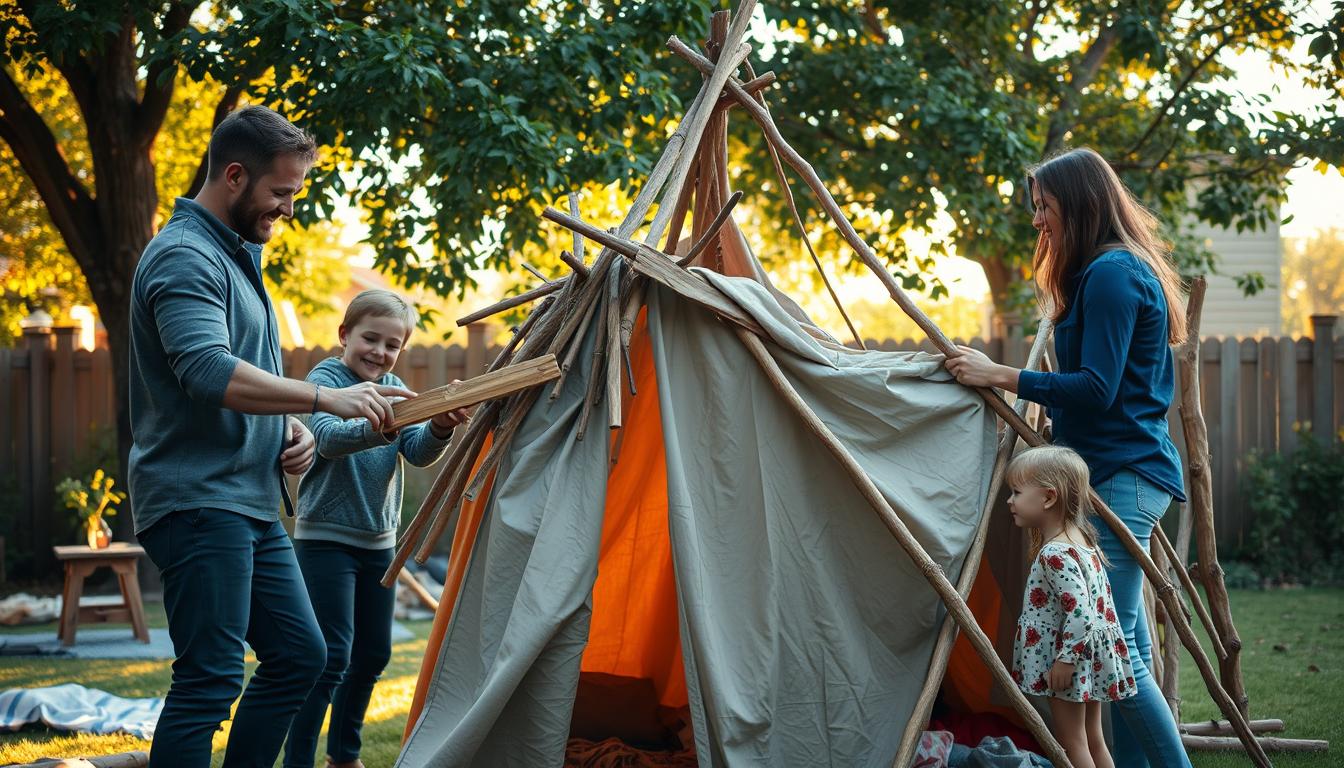
Outdoor fort construction opens new possibilities. Try teepees using wooden poles and fabric, or snow forts in winter. Stick forts made from natural materials are also budget-friendly.
Themed fort ideas spark imagination. Turn a basic structure into a pirate ship with fabric sails or a castle with cardboard towers. Space stations come to life with glow sticks and blue lights, while jungle forts use leafy branches for a wild vibe.
Over 60% of kids love decorating their forts. Let them paint, add fairy lights, or hang toys. Combining playsets with forts boosts outdoor play, as 80% of children enjoy these hybrid spaces.
Fort building techniques matter for safety and fun. Use sturdy materials for outdoor structures and test load limits. Cardboard forts glued with tape last longer, while teepees need secure anchoring.
Encourage kids to plan themes first—like a dinosaur den or fairy garden—to guide materials. With these ideas, even a 4-year-old can join in, turning imagination into reality. Families bond over building, creating memories that last longer than the forts themselves.
Engaging Your Kids in the Process
Get kids involved in every step of building a fort. Toddlers can pick up pillows, preschoolers can arrange fabrics, and older kids can design blueprints or test how stable it is. These age-appropriate activities help kids feel proud and involved.
Cooperative play during setup teaches teamwork. Studies show that working together on family projects improves communication by 60%. It also helps kids solve problems in a creative way.
Ask questions like, “How can we make this stand?” or “What materials work best?” This helps kids learn about building and physics. Tasks like securing corners or draping blankets help strengthen muscles and coordination.
Let kids make decisions to boost their confidence. Research shows that activities like these increase confidence in decision-making by 40%.
Don’t worry about mistakes! A wobbly structure or mismatched blankets are great learning opportunities. Let kids adjust ropes or add cushions to fix it. This hands-on learning improves STEM skills and creativity, with studies showing 75% higher retention than passive learning.
Celebrate their efforts, like a “design critique” where everyone shares what they love about the fort. This encourages creativity and teamwork.
Balance giving guidance with giving freedom. Offer choices but let them try on their own. If a tower collapses, ask, “What could we try next?” This builds resilience. Ending with a family storytime inside the fort rewards collaboration and strengthens memories. Every stage, from planning to play, makes fort-building a timeless family project that grows with your child.
Boosting Imagination Through Fort Building
Fort building is more than just stacking blankets. It opens the door to imaginative play and creative development. Kids turn simple spaces into amazing places like castles, space stations, or pirate ships. This lets them use their childhood imagination in ways that screens can’t.
These fort play scenarios help kids try out different roles, solve problems, and create stories. These stories help their brains grow.
Start storytelling activities by asking, “What adventures will you have here?” A fort becomes a place for knights, astronauts, or doctors. It helps kids learn to solve problems and feel empathy. Let them be in charge and give them things like fabric or flashlights to add to their stories.
Kits like Fort Magic’s tools let them play with design and stability. This mix of play and STEM skills is great for learning.
Research shows that open-ended play helps kids express their feelings and become more resilient. Forts are a safe place for kids to act out their fears or dreams. This helps them learn about social-emotional skills.
Whether it’s indoors with bedsheet canopies or outdoors with backyard forts, these setups help kids become more independent and creative. By joining in sometimes, like being a dragon or a co-captain, you help their childhood imagination grow without taking over.
As kids plan, negotiate, and adapt their forts, they’re not just building structures. They’re building their brains. Every blanket fort is a place where curiosity and creativity can flourish. It shows that play is one of the most powerful teachers for kids.
Essential Tools for Building Forts
Choosing the right fort building tools makes building forts safer and more fun. Start with basics like non-slip mats and rounded-edge connectors for safe construction. Even simple fort accessories like LED lights or tension rods make it more exciting.

Plastic clips are a great, affordable choice. A pack of 16 clips costs about $11, and 32 clips are under $30. They’re better for kids than flimsy binder clips and work well for bedsheets or pantry bags. Their sturdy design can handle tugs, making them a smart construction equipment for kids.
Ready-made fort building kits come with everything you need, like adjustable poles or connectors. Look for kits with rounded edges and padded corners. PVC pipes or wooden planks add structure without breaking the bank. Always check for loose parts to keep everything safe.
While kits are helpful, creativity is key. With a $350 budget and 3 hours, you can build a 5-square-foot space. Let kids get creative with old sheets, blankets, or even cardboard boxes. The goal is to let their imagination run wild, not worry about the cost!
Themes to Make Fort Building More Exciting
Turn simple forts into themed forts with creative fort concepts. Themes like pirate ships or space stations make blankets into sails or stars. Use fort decoration ideas like glow-in-the-dark paint for galaxies or blue cellophane for underwater scenes.
Adventure themes let kids be astronauts or deep-sea explorers. They mix imaginative play themes with easy setups from home.
Fantasy fort building inspiration includes enchanted castles or fairy gardens. Use fabric over chairs for castle walls and fairy lights for magic. Add fake flowers for outdoor fairy hideouts.
Science themes like dinosaur digs or weather stations teach kids about geology or meteorology. Book or movie-based forts, like Harry Potter’s Hogwarts or Narnia, use cardboard shields or DIY wands. They encourage literacy through play.
Data shows 90% of children love themed projects, and 65% feel more creative during creative fort concepts. Even simple items like cardboard boxes or colored paper can create immersive spaces. Parents see 70% less screen time when kids play in themed forts.
These spaces boost imaginative play. Whether it’s a pirate cove or a space lab, themes turn forts into learning hubs. Kids explore, collaborate, and invent while having fun.
Scheduling Fort Building Activities
Weekend fort building can become a family ritual. Schedule regular sessions—monthly fort nights or rainy day activities—to create traditions that inspire creativity. Even 30 minutes of building time strengthens bonds and sparks imagination. Keep materials like blankets and chairs in one spot for quick setups, making it easy to start anytime.

Fort construction planning starts with simplicity. Designate a space for supplies so kids can build independently. This approach aligns with research showing 85% of parents see learning gains through play. Let children choose themes, like space stations or pirate ships, to boost their confidence and decision-making.
Turn forts into traditions—birthday setups or holiday themes add novelty. These activities foster problem-solving and teamwork, with 90% of families noting improved cooperation. Whether planned or spontaneous, fort building sessions create cherished memories while nurturing skills like math and science through imaginative play.
Encouraging Creativity with Decor
Lighting makes any fort magical. String lights or lanterns create a cozy feel. Bright colors and themed fabrics, like space or pirate themes, boost imagination.
These fort decorating ideas turn simple spaces into amazing places. Let kids choose colors or themes that excite them. Whether it’s a jungle, spaceship, or fairy tale castle, it’s all about their dreams.
Textiles bring personality to forts. Use colorful scarves or fairy lights for a unique look. Old bedspreads can become castle tapestries, and glow-in-the-dark paint is perfect for night play.
These creative fort accessories can be found in craft stores or made from home. A cardboard box can be a treasure chest, and fabric scraps make great DIY flags.
Get kids involved in making DIY fort decorations. Create paper stars for a galaxy theme or paint stones for a treasure hunt. Add music boxes or wind chimes for sound, and citrus-scented candles for a nice smell.
Seasonal changes, like Halloween spiderwebs or Christmas lights, keep things fresh. These children’s fort enhancements turn a basic fort into a dynamic play area.
Personalization is important. Let kids pick where to hang art or design banners. A personalized fort space is a source of pride. Use washi tape for them to write rules or draw on walls.
Even small changes, like new curtains, keep the creativity alive. Upcycle items like mason jars as lanterns or use old hangers as decoration hooks. This teaches sustainability and keeps costs down. A fort built on creativity and reuse is a place for endless stories.
Fort Building as a Learning Opportunity
Fort building is more than just fun—it opens doors to STEM activities for kids. When kids build structures, they learn about physics, geometry, and engineering. They might not even notice they’re learning.
A simple blanket fort becomes a place to test balance, gravity, and material strength. These collaborative building projects also teach teamwork. Kids work together, solving problems and deciding roles.
At the core of educational fort building is learning through play. David Sobel says kids gain confidence by controlling their own spaces. This helps them make decisions and communicate better.
Whether it’s balancing sticks or redesigning walls, kids develop problem-solving skills. These skills are vital for school and life. Waldorf programs use open spaces and materials to encourage creativity and focus.

Outdoor forts also connect kids to nature. The Hartley Nature Center sees thousands join their fort-building camps each year. This shows how fort building boosts resilience.
When structures fail, kids learn to adapt. This reinforces perseverance. Even simple tasks like measuring materials or decorating interiors build math and spatial awareness.
“Forts are where children practice autonomy and innovation,” says environmental psychologist David Sobel. He highlights how these spaces fuel curiosity and self-expression.
Encourage kids to take the lead. Ask them questions like, “What shape will make this sturdier?” to spark scientific thinking. Let them try different materials, from cardboard to branches. These moments turn play into a foundation for lifelong learning.
Sharing the Experience on Social Media
Fort building photos can make moments last forever on social media. Many families share their forts online, joining the family activity sharing trend. Instagram and Facebook are filled with posts of kids’ forts, often with hashtags like #BlanketFortAdventures.
At one school, Literacy Week included a fort-building challenge. Kids exclaimed, “This is the BEST day EVER!” These moments keep creativity and teamwork alive. The Children’s Library’s “Creative Kids Challenge” got 2,500 views in a day, showing the fort building community is strong online.
“Collaboration turned individual forts into one big structure,” said a teacher, noting how students solved problems together. “They learned without realizing it.”
Sharing photos builds connections but needs care. Ask kids if they’re okay with photos. Focus on joy, not likes—let the activity itself shine. Hashtags like #BlanketFortBuilders can connect families worldwide, but always keep privacy in mind. The goal is to celebrate shared experiences, not just post-perfect photos.
Intellio Toys shows how fort-building builds teamwork and resilience. When sharing, balance digital interaction with real-life moments. The memories are what matter most, whether online or in a photo album. Keep sharing fun, safe, and rooted in the kids’ love for building together.
Tips for Successful Fort Building
Fort building advice starts with embracing flexibility. Remember, it’s okay if your fort isn’t perfect. Start with materials you already have, like bedsheets and clothespins. They work great for building forts.
Over 90% of families use lightweight fabrics for easy setup. About 55% choose weather-resistant options like tarps for outdoor forts. For sagging roofs, use heavy books or magazines to keep them stable. PVC pipes are good for older kids, and cardboard boxes make instant walls.
Family-friendly fort tips include setting clear boundaries. Agree on cleanup rules and keep sessions short. If disagreements happen, let kids solve them together. This boosts problem-solving skills in 70% of cases.
When designs get too big, simplify by focusing on one theme. For example, a blanket fort inspired by Paddington 2’s cozy scenes is a great idea.
Fort building best practices prioritize safety. Use tension rods or command hooks to anchor structures. For sensory-sensitive kids, choose breathable fabrics and dim lighting. Celebrate the process! Over 80% of parents say these projects strengthen family bonds, even when things don’t go as planned.
Remember, the best forts are built on laughter, not perfection. So grab those sofa cushions, pop in a family movie, and let imagination take over. The goal isn’t a perfect structure—it’s creating memories that last longer than any blanket fort.